
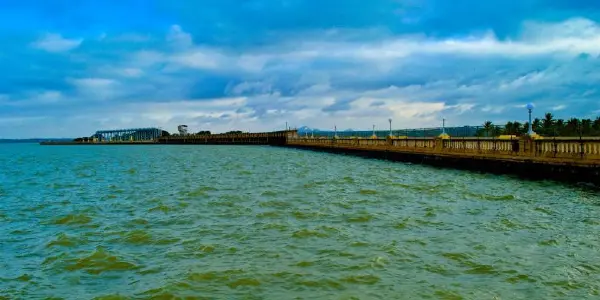
KRS Dam is one of the prominent rivers of southern India and one of the critical sources of irrigation, drinking water, and hydroelectric power for the regions it supports. KRS Dam is quite famous because of its engineering and historical importance, and because of the very renowned Brindavan Gardens lying underneath, it has become a favourite tourism destination. During the early 19th century, ideas regarding the construction of a Dam on Cauvery came before anything moved. However, it materialized during the rule of Krishna Raja Wodeyar IV, who was then the ruler of the Mysore Kingdom, and construction finally materialized in response. The Dam was conceived primarily for irrigation purposes in the dry tracts of the districts Mysore and Mandya, where agriculture remained heavily based upon seasonal rainfalls. He considered the scope of irrigation and drinking supply on both sides of this river much more advanced with the population growth. Thus, the Mysore dam idea was taken up by the Diwan of Mysore at that time, one of India's leading engineers - Sir M. Visvesvaraya, in the year 1911. He is considered as the architect of modern Karnataka. He played a very important role in planning the project and seeing it through to its realization. It took more than two decades for the Dam to be completed, and it was finally constructed in 1932. This is definitely a truly extraordinary feat in terms of scale and technology of that time. Explore more scenic destinations in our Weekend Getaways From Bangalore guide.One of the distinguishing features of KRS Dam is the provision of controlled water outflow through sluice gates in the Cauvery River and canals downstream. Such a supply of water, which is provided through the sluice gates, should control and regulate the availability of irrigation for cultivable crop cultivations in fields in the Mysore and Mandya Districts. The source of the water supplied in this Dam has proved to augment and form a drinking watering system that provides requirements for the town of Mysore and villages near this locality. There is a dam that produces hydroelectric power. That is one of the many that feed the region. Although its capacity is low compared to the modern ones, at the time of its construction, it was early in the 20th century, and it was a show. Probably the most sought-after place associated with the KRS Dam is Brindavan Gardens, situated directly beneath the Dam. The gardens are a perfect example of a classical Indian garden design that fuses the elements of traditional Mughal gardens with local landscape elements. It was designed by the celebrated architect K. H. Nanjundiah. The entire layout has terraces, fountains, and reflecting pools , along with flower beds. It covers an area of about 60 acres under which the Cauvery River moves calmly beside it. Planning a short family escape? Check our One Day Trip From Bangalore guide.The Brindavan Gardens, in particular, can be used especially in the evenings because it organizes the musical fountain show. It turns out to be a light and sound show during the evening hours that draws in people to visit it in lakhs of numbers. It really turns out to be a beautiful place with the addition of music and lights, accompanied by perfectly synchronized water fountains for a very spellbound end view to spend the last of it at the KRS Dam. There are also well-managed botanical gardens, a walking path, and a boating space. The place is ideal for taking a few quiet walks, and one can also take a boat ride or sit and spend time under the green. The place is one of the excellent places that attract family people and nature lovers. Beautiful flower beds, neat hedges, and a great sense of peace and beauty are also there in the place. The Dam has submerged parts of land, including farming fields and natural habitats. In the long run, this affects biodiversity and local wildlife, as well as aquatic life. However, there is a conservation program by the government to mitigate some of its effects, such as ensuring that the local wildlife sanctuaries are maintained and advocating sustainable agriculture. Krishna Raja Sagara Dam is one of the fine examples by which the early 20th-century engineers succeeded, considering the vision of the creators themselves. The Dam constructed by the people over the water of the River Cauvery helped deliver irrigating water as well as a potential source of hydroelectric power for this area of Mysore; outside of its practical purpose, it has become a sign of culture and history in it. The Brindavan Garddam supplements the beauty of the Dam , and thus, it is an attractive tourist destination. Functions that support the agricultural economy and water resource management in the region and give a beautiful natural background for visitors make the KRS Dam an important landmark in Karnataka's history. KRS Dam is more than a miracle of engineering. It has been an icon and epicentre of cultural, environmental, and economic life that has shaped the region. Therefore, it shapes the community and status of the Dam. So, it deserves visits, understanding, and conservation. Experience Mysore sightseeing and KRS Dam with our Mysore One Day Tour Package.Nearby Places to KRS DamBrindavan Gardens: Right under the KRS Dam sit the famed Brindavan Gardens. Known for their neat designs, lush greens, and nightly music and light water shows. These gardens cover 60 acres and are a top spot for tourists. They offer a great place to relax and have family fun. The nice set of steps, bright flower beds, and lit-up water shows add beauty to the dam, making it a must-see.Mysore Palace: About 18 km from KRS Dam, the Mysore Palace stands as one of India's biggest and most visited places. It’s a great show of Indo-Saracenic style, with detailed works, royal items, and fancy tops. During the Dussehra fest, it lights up with many lights, making it feel magical. The palace tells us of the royal Wadiyars who helped make the KRS Dam.Chamundi Hills: Some 23 km from KRS Dam, Chamundi Hills houses the famed Chamundeshwari Temple for goddess Durga. It gives wide views over Mysore and is loved by both temple-goers and nature fans. People often walk up the 1,000 steps or drive to the top. The big Nandi (bull) statue there is another draw.Ranganathittu Bird Sanctuary: Set about 15 km from KRS Dam, this place is a dream for bird lovers and those into nature. It’s across some isles on the Cauvery River and houses birds like painted storks, herons, and kingfishers. Boat rides let you see birds and crocs up close.Srirangapatna: Just 14 km from the dam, Srirangapatna is linked to Tipu Sultan, the "Tiger of Mysore." The town has spots like the Ranganathaswamy Temple, Daria Daulat Bagh (Tipu’s summer spot), and Gumbaz (his resting place). Its deep past, build, and cultural worth make it a key spot for history buffs.St. Philomena’s Church: In Mysore city, about 20 km from KRS Dam, you find St. Philomena’s Church, one of Asia's tallest churches. Its Gothic build has great glass windows and twin towers up to 175 feet. Each year, lots of people come to see this big, calm place.Melukote: Around 40 km from KRS Dam, Melukote is known for the Cheluvanarayana Swamy Temple and its old role in Sanskrit and Vedic studies. Placed on a rocky hill, it offers nice views and a holy feel. There are old waters and temples built during the Hoysala time.Balmuri and Yedmuri Falls: Roughly 8–10 km from KRS Dam, these small but pretty falls come from check dams on the Cauvery River. Balmuri is great for picnics and safe water fun in the summer. With lots of green around, these falls are good for quick stops, taking photos, and easy walks.Rail Museum, Mysore: About 18 km out, the Mysore Rail Museum is good for those into rail tales and old trains. It shows steam machines, royal wagons, and talks about the growth of Indian Railways. It’s a good spot for families, close to the Mysore train station.Kishkindha Moolika Bonsai Garden: Around 17 km from the dam, this rare garden in the Avadhoota Datta Peetham has over 100 types of bonsai trees. Covering 4 acres, the garden mixes nature, art, and soul vibes. It’s a calm spot to enjoy time around well-crafted tree art.Best Times to Visit KRS DamMonsoon Season (July to September): The rainy months are the best time to see the KRS Dam. During these days, the dam gets a lot of water from the Cauvery River, and the lake is full most of the time. Seeing water rush from the gates is an awesome view. The Brindavan Gardens around are very green, and the air is cool and nice, great for looking around and taking photos.Post-Monsoon / Early Winter (October to December): This is a very good time to go to the KRS Dam, too. The air is nice, the sky is clear, and the gardens look bright and full of life after the rain. The music show at Brindavan Gardens is nice in the cool night air. It's a good time for guests who like cool weather and do not want the rain crowd.Winter Season (January to February): Cold weather is cosy for day trips, picnics, and seeing places close by. Even if the water in the lake may start to go down, the pretty view of the gardens and the cool wind still brings many people. This time is great for family time, and you can look at old and cool spots around Mysore and Srirangapatna easily.Avoid Summer (March to June): The hot months are not the best for going to KRS Dam, as it can get hotter than 35°C. The gardens may not be as full, and the water in the dam might be low because it gets less water. The heat can be too much for going out, mainly in the middle of the day. Yet, if you visit in the early morning or late afternoon, you can still enjoy the light shows and cool winds.How to Reach KRS DamBy Road: Road travel from prominent cities like Mysore and Bengaluru makes KRS Dam easily reachable. It is roughly 18 kilometres from Mysore and about 143 kilometres from Bengaluru. Both cities offer taxis, personal cars, and scheduled buses. Especially the section from Mysore, the route winds through lush meadows and small villages. Near the dam and Brindavan Gardens, parking is plentiful.By Railway Station: Around 18 kilometres from KRS Dam, Mysore Junction offers the nearest major railway hub. Regular trains link Mysore to Hyderabad, Chennai, Bengaluru, and other places. From Mysore station, you may take a local bus or hire a cab to reach the dam. The train ride is economical and convenient, especially for tourists from distant places.By Airport: The nearest airport to KRS Dam is Mysore Airport, some 30 kilometres distant. Domestic limited flights mostly link Bengaluru to a few other cities. The best option for international as well as internal travel is Bengaluru's Kempegowda International Airport (around 180 kilometres away). You can get a cab from either of the two airports or take the bus to the dam easily.By Bus: Private buses and scheduled KSRTC buses travel from Mysore and Bangalore to KRS Dam and adjacent areas. From Mysore, you may go to Brindavan Gardens or KRS through a local bus departing from the city bus terminal. Buses offer an affordable option for backpackers and budget tourists.