

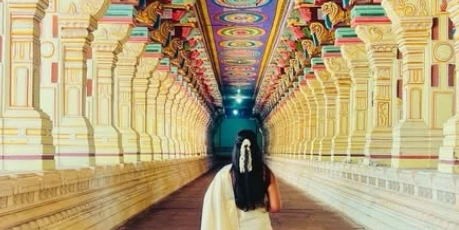
Rameshwaram sits like a quiet breath in Tamil Nadu’s Ramanathapuram district. Waves from the Gulf of Mannar curl toward its shores, while the Bay of Bengal spills clear water nearby. Spirit hums through this place, felt deeper here than in many corners of India. Beauty arrives without warning - sudden palms, salt air, stone temples half-lost in breeze. Not just faith draws people, though it ranks among the country’s holiest stops. The land holds prayer, yes, yet also sand that glows at dusk. Few places balance stillness and devotion so lightly. A striking shoreline draws people, while history pulls them deeper. Each year brings crowds, both tourists and those on spiritual journeys. On Pamban Island it sits, cut off by water but joined by an iron ribbon - the famous Pamban Bridge - where waves flash below, and views stretch far. The heart of the place beats at Ramanathaswamy Temple, one among twelve sacred shrines tied to Lord Shiva. Its corridors run longer than any other Hindu temple path in the country, known worldwide for their reach. From every corner of the country, people come to this temple built in the traditional Dravidian style. A hallway lined with finely detailed columns holds one key attraction. Devotees perform rituals here instead of just observing. Sacred baths take place in pools known as "Theerthams" during visits. Blessings from the deity are sought without hesitation. Travelers planning spiritual journeys and long weekend escapes can explore more destinations through our Weekend Getaways From Bangalore and Domestic Tour Packages From Bangalore guides.Beautiful scenery draws people here, not just faith. Nature lovers find peace under open skies, while those who carry cameras capture moments beside water so blue it feels unreal. At the island’s tip sits Dhanushkodi - silent, empty, shaped by waves and wind. The sea meets there in swirling patterns, one ocean joining another without warning. Ruins remain from a storm long ago, standing like memories after everything else washed away. Visitors pause at these broken walls, looking out across the endless tide. History lives quietly through places tied to figures once present on these streets. Among them was A. P. J. A boy who once chased kites in Rameswaram grew up to shape missiles. That lad, Abdul Kalam, now echoes through stone at a house turned shrine. Visitors arrive daily, not just from nearby towns but from distant countries too. Myth breathes deep here - where ancient tales of gods and demons blur into temple chants. The Ramayana lives loud in alleyways, shaping how people see faith and history alike. For a comfortable and well-planned pilgrimage experience, many travelers choose our Rameswaram Tour Package covering temples, sightseeing, and travel arrangements.Nearby Places to Visit in RameshwaramDhanushkodi: A stretch of sand and silence begins twenty kilometres past Rameshwaram - this is Dhanushkodi. Once alive with homes and daily noise, it now rests half-buried after winds tore through in 1964. What remains stands quietly: broken walls, a railway platform without trains, stone shells of old churches. Though no one officially lives here anymore, footsteps still mark the shore each day. Where sea currents shift between the Bay of Bengal and the Indian Ocean lies a place few can pinpoint on maps. Visitors linger because the wind moves softly across open dunes. Waves roll slow, skies widen wide, colours blur at sunset into something hard to name. Stillness takes hold - not empty, but full in its own way.Link over Pamban: Stretching across water, the Pamban Bridge connects Tamil Nadu’s coast to Rameshwaram. Completed back in 1914, this was the country’s earliest bridge built over the sea. It cuts through the beauty of the Palk Strait, drawing eyes with its long reach above waves. People come just to watch boats drift under while trains move steadily overhead. section that lifts open, making room for ships, thanks to its twin rising leaves.Ramanathaswamy Temple: Home to one of the twelve sacred Jyotirlingas dedicated to Lord Shiva, Ramanathaswamy Temple stands as a key spiritual landmark in Rameshwaram. With the nation's longest temple passageway, it shelters hundreds of intricately sculpted columns marked by bold Dravidian design. Devotees seek cleansing through rituals including dips in its 22 sanctified wells, known locally as Theerthams. Because of its massive scale and deep religious meaning, many locals are drawn here often. Though quiet at dawn, the air hums with chants by noon.Kalam Memorial: Born in Rameswaram, India, A. P. J. Abdul Kalam grew into a figure widely admired across the nation. His life stands remembered at the Abdul Kalam Memorial. Inside, photographs line the walls alongside objects he once used, each piece telling a part of his path. From a quiet coastal town to occupying the highest office, his story unfolds here. Shaped by echoes of Indian heritage, the structure itself blends design choices that honour the past while sparking thought. Rather than just looking back, it quietly invites reflection through form and space.Agni Theertham: Past the Ramanathaswamy Temple lies Agni Theertham - a stretch of sand touched by faith. Not just any shoreline, it pulls pilgrims deep into ritual and quiet thought. Bathing in these waters comes first, then temple steps follow, washing away wrongs along the way. Old tales tell how Rama turned to prayer here once the battle ended, seeking Shiva's grace after Ravana fell. While waves roll gently now, the air still carries the weight of devotion, of journeys made for something beyond sight. Many arrive drawn less by grandeur than by calm held within salt and silence.How to Reach RameshwaramBy Road: Travelling by road brings visitors easily to Rameshwaram from big towns across Tamil Nadu. From places such as Madurai, Chennai, or Tiruchirappalli, people move quickly using buses, taxis, or their own vehicles. Crossing the famous Pamban Road Bridge offers sweeping sights of the sea stretching wide on both sides. That stretch alone lifts the whole journey into something memorable. Because of reliable transport options - run by both official services and private operators - driving remains a smart choice for anyone heading daily to Rameshwaram.By Train: Rameswaram Railway Station connects directly to major cities across southern India. Trains arrive here daily from places like Chennai, Coimbatore, and Madurai. One highlight stands out - passing over India’s first sea bridge, the old Pamban Bridge. As the train moves slowly, views of open water unfold alongside small fishing boats below. The ocean stretches wide outside every window, making travellers pause without realising it. The ride becomes something people recall long after stepping off.By Airport: About 170 kilometres away, Madurai Airport serves as the nearest air gateway to Rameshwaram. Connected well to big cities like Chennai, Mumbai, and Bangalore across India. From here, visitors usually take a bus or hire a cab to Rameshwaram. The ride by road lasts close to three or four hours, offering views of countryside lanes and seashores. Travelers find it both convenient and smooth, passing through quiet villages and along coastal strips.Best Time to Visit RameshwaramWinter Season (October to March): Cool months from October through March make trips to Rameshwaram pleasant. Temperatures sit between 20 and 30 degrees, mild enough for walking around temples or exploring sights. Instead of rushing, many pause at Ramanathaswamy Temple, wander the quiet shores, or stand where land meets sea at Dhanushkodi. Sharp breezes roll in off the water while skies stay open and bright overhead. Because of that, light jackets come along - alongside prayers, footprints, and slow morning walks.Summer Season (April to June): Heat often climbs past thirty-five degrees when April rolls into June. Around Rameshwaram, the air feels heavy as Tamil Nadu’s coast pulls in dampness from nearby waters. Morning light brings a break before temperatures rise too high again by midday. Some travellers choose these cooler hours just to move without sweating too much. Even at peak sun, temple walls stand open to those who walk slowly and pause often under shade. Crowds thin once lunchtime hits, leaving space near ancient stones untouched by noise. Visitors looking for quiet moments find them hiding behind columns where wind slips through carved gaps.Monsoon Season (July to September): Raindrops trace slow paths down temple walls when July arrives. As clouds settle low, they bring freshness that sharpens the scent of salt and sandstone. While sudden showers might delay a boat ride or shift a walking route slightly, such moments pass quietly. Fewer people wander near the shorelines now, leaving space between each pilgrim at prayer. Stillness spreads through lanes where echoes move more easily than crowds. Even the wind seems to pause beside ancient pillars during these months.