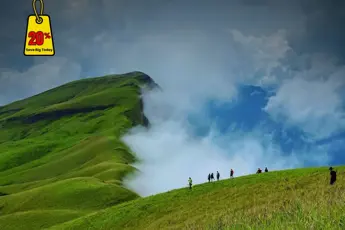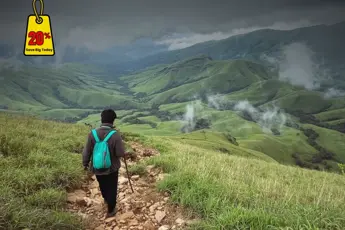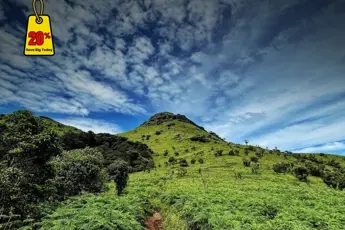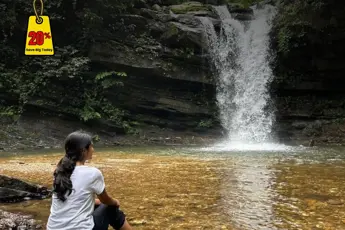


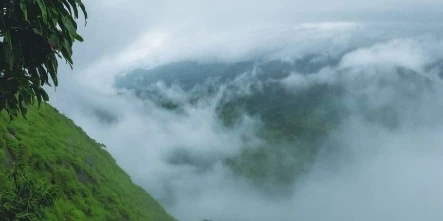
The combined history of AMK forts is integrally connected with the Maratha Empire as well as with the defence of the Western Ghats of Maharashtra. The forts consisted of a succession of a large number of hill forts maintained for the utility of protecting commerce routes, blocking the movements of the enemies, and being defence outposts on behalf of differing regimes, i.e., the regime of Chhatrapati Shivaji Maharaj. Constructed in medieval times, there is no proper record of their history, but it is thought that they were built or greatly fortified during the 17th century by the Marathas. Situated on cliffs of enormous height, they were nearly invincible and were perfectly suited for defence. The Marathas employed these forts to regulate and govern the Nashik-Kalyan trade route and the surrounding ranges and valleys. Hardcore trekking adventures and mountain challenges are featured in our Treks in Maharashtra guide.All strategic significance was lost by the forts during the 19th-century British occupation. They were lived in, partially destroyed, or abandoned in great numbers. The forts have retained their architectural elements, including rock-cut staircases, shelter or storage caves, and huge rock-carved water cisterns. These were essential to survival for extended periods when besieged. And last, the AMK forts, which are an advertisement for Maratha war planning and engineering expertise. Their rugged ease of access, as well as being inaccessible, has contributed to keeping them relatively intact and untrammelled, and provides trekkers with a holiday as well as a step through time. A visit to these forts provides a sight of ancient stoutness, native self-sufficiency, as well as the ancient Indian fort-building masterminding. Trekkers preparing for challenging mountain routes often gain experience through our AMK Trek Package.Tourist destinations around the Alang Madan KulangKalsubai Peak: Adjacent to the trekking spot of AMK, Kalsubai is a state high of 5,400 feet. Among the trekking spots popular among trekkers, it has Sahyadri ranges like AMK forts, Harishchandragad, and Ratangad. Trekking to Kalsubai is moderately tough with iron ladders and handrails to hold on to. Sunrise at the summit is very scenic, and hence it is heaven for a photographer and a nature lover.Ratangad Fort: Ratangad is 20 km from AMK, a very old fort in the Ratanwadi area. The fort is over 2,000 years old and was conquered by Chhatrapati Shivaji Maharaj. The fort possesses a famous rock face named "Nedhe" or the 'Eye of the Needle,' and provides great views of the Bhandardara dam and valleys below. It's a wonderful combination of history and scenic hiking.Bhandardara: Bhandardara is a serene hill station and a good retreat after the exhausting trek. It provides alternatives such as Arthur Lake, Umbrella Falls, Randha Falls, and Wilson Dam, the original one. Bhandardara is also a point of departure for treks such as Kalsubai and Ratangad, thus the origin of nearly all trekking tours of the Sahyadris.Harishchandragad: Approximately 40 km away from here is the Harishchandragad, a Konkan region fort trek destination famous for its ancient temples, caves, and cliff face. Mythologically and historically significant and highly coveted by adventure enthusiasts as well as history enthusiasts, this fort is.Best Time to Visit for Alang Madan Kulang TrekPost-Monsoon (October to November): The initial months following the monsoon are likely to be one of the best times to hike the Alang Madan Kulang (AMK) trail. October and November have the entire Sahyadri range covered with dense green sprouts, the climate is fresh, and the streams and waterfalls still work because of the monsoons. The landscape, therefore, is of previously unseen grandeur, with fogs in the valleys and wildflowers of many hues offering some beauty for the climb. Yet, there are a couple of slippery sections, so maximum care and equipment are required.Winter (Dec-Feb): Winter is the best season to take the trek. It is cold, dry weather from December to February, ideal to tackle the steep gradients and rocky bits without any inconvenience of heat or dampness. The sky is a brilliant blue with views of surrounding peaks like Kalsubai, Harishchandragad, and Ratangad. It is ideal at this time too, as regards the state of the trail, with the ground being dry and hard most part.Avoid Monsoon (June to September): Even if the Sahyadris appear to be at their best during the monsoon season, it is highly unsafe to attempt the AMK trek at this time. The routes are very slippery, visibility is low due to thick fog, and ascending the steep rock surfaces is dangerous. Flash floods and leech bites also occur commonly, and therefore, it is not advisable even for experienced trekkers. Do not even think of trying this trek during the monsoon.How to Reach Alang Madan Kulang TrekBy Road: The base village of the Alang Madan Kulang trek is Ambewadi or Kulangwadi, both in Nashik district of Maharashtra state. Both villages are road-connected and can be accessed by local transport or private vehicles. The road route directly from Mumbai (about 150 km) or Pune (about 180 km) is through Igatpuri or Ghoti and then on local road routes to Ambewadi. The roads in this area become narrower and bumpier closer to the foothill, so high-clearance driving or slow driving. Shared jeeps are also available from nearby Kasara or Ghoti stations.By Train: The nearest big railway station is Kasara, which is on the Central Railway between Nashik and Mumbai. Local and express trains operate on a regular timetable between Kasara and Mumbai CST daily. Local transport or a private jeep can be booked from Kasara to go further to Ambewadi or Kulangwadi, which is 2–3 hours, depending on weather and road conditions. Or, drive by road until Igatpuri Railway Station, near Ghoti, and drive by road until the base village.By Airport: The nearest airport is Chhatrapati Shivaji Maharaj International Airport, Mumbai, and it is approximately 150 km away. Public transport or a taxi can be hired from the airport to reach Kasara or Ghoti, and further travel to reach the base village of the trek by road. The road trip from the airport will take around 4 to 5 hours.