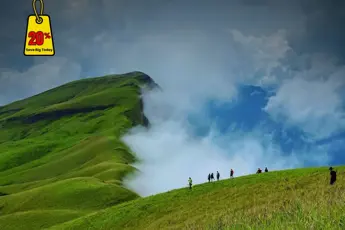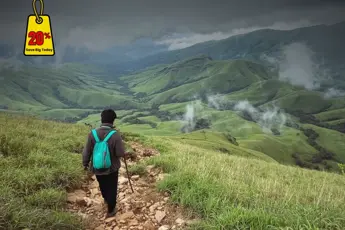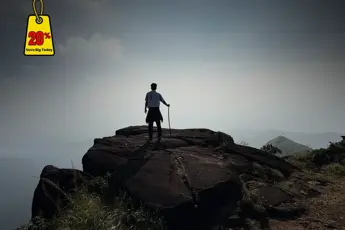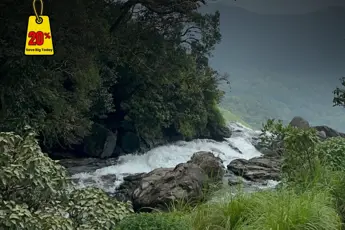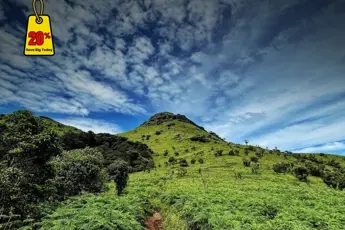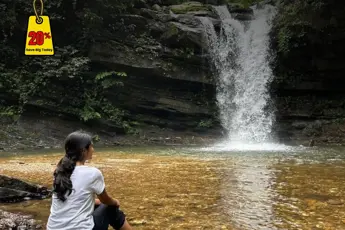

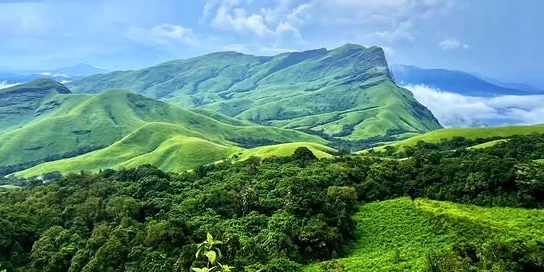
The name means "horse face" in the local Kannada language, is not only famous for its natural beauty but also for its ecological and historical importance. It was inhabited by tribal people for centuries in harmony with dense forest cover and fauna. it gained prominence over time because of its strategic location and richness of nature. Historically, the Western Ghats and it belonged to the ancient Kadamba kingdom and later the Chalukyas, Hoysalas, and Vijayanagara Empire. Although it was not a major political centre, its passes and mountains played a vital role in intraregional mobility and trade. The top itself was named "Kudremukh" because it was horsehead-shaped, and it was an important landmark for passing travellers as well as locals. In the 20th century, it became more prominent as it possessed huge deposits of iron ore. Kudremukh remains one of the most scenic trails featured in our Treks Near Bangalore guide.In the 1970s, the Kudremukh Iron Ore Company Limited (KIOCL) was established as a public sector enterprise and housed one of Asia's largest iron ore mines. The mining activities of the location contributed significantly to disrupting the ecology of the region and transformed the region into one with gigantic controversy in the context of conservation and sustainable development. Owing to growing environmental pressure and intense pressure from green activists and locals, mining finally ended in 2005. Ever since, the area has been incorporated into the Kudremukh National Park, which is a highly ecologically rich block of the Western Ghats as well as a UNESCO World Heritage Site. Now, it is also well known for scenic treks as for being the icon of conservation movements. The change from a mining village to a protected ecological reserve is India's increasing dedication to the conservation of its natural heritage. For a guided mountain experience with permits and trek support, many travelers choose our Kudremukh Trek Package.Places near Kudremukh TrekKudremukh National Park: This vast park boasts thick rainforests, vegetation and wildlife, and other trekking trails, among which is the well-known Kudremukh peak. A UNESCO World Heritage site, the park is the perfect place for nature walks, bird watching, and wildlife sighting. Leopards, deer, Malabar civets, and lion-tailed macaques are the residents of the land, and it is now a priority spot for biodiversity enthusiasts.Hanuman Gundi Falls: Hanuman Gundi Falls, situated approximately 20 km away, is a picturesque cascade into the forested heartland. Water falls down some 22 meters, and below there is a natural tank where one can indulge in a splashing bath. The falls can be visited comfortably after monsoon, when there is a spate of water and dense vegetation at the base.Kalasa: Kalasa is a small temple town that is small but close to Kudremukh, about 25 km away. It's famous for the ancient Kalaseshwara Lord Shiva Temple. It's situated on the River Bhadra and is also a pilgrim centre sacred to many followers. It's a serene destination to witness the local way of life and try some local South Indian food.Gangamoola: Gangamoola or Varaha Parvatha is approximately 35 km away and is the source of the three largest rivers, Tunga, Bhadra, and Netravati. It is heavily forested, rich in mineral wealth and a geologically and religiously significant location. The source points of these rivers are easily accessible by tourists with a quick hike into the forests.Sringeri: Approximately 55 km from Kudremukh is the sacred pilgrimage centre as well as the Sharada Peetham established by Adi Shankaracharya. Ancient in its build but spiritually serene, the temple complex is along the banks of the Tunga River. One simply cannot miss coming here if one is interested in heritage and Indian philosophy.Best Time to Visit Kudremukh TrekPost-Monsoon (September to February): September to February is the best time to be in Kudremukh after the monsoon season. The terrain is then green, the sky blue, and the climate pleasant and cool, ideal for trekking. The streams are brimful, and the entire area is refreshed and revitalised. With moderate temperatures between 15°C and 25°C, it is the safest and ideal time to see the trek in all its glory.Monsoon Season (June to August): While monsoon rains lend mythic beauty to Kudremukh, foggy trails, waterfalls, and thick green leaf canopy are succeeded by gushing rain, slippery inclines, and leeches. Treks are challenging at this time, but heaven for veteran trekking buffs. Clearance from the forest department may also be limited based on weather conditions, and proper safety measures need to be followed.Summer Season (March to May): The Summer season in Kudremukh will be hot and dry, with temperatures predominantly above 30°C. The greenery does not prevail, waterfalls en route evaporate, and the trek tends to become a tiresome hike due to sun exposure. Trekking during the summer season is not advisable for novices, as well as for nature enthusiasts, for a scenic hike.How to Reach Kudremukh TrekBy Road: It is road accessible and well-connected from major cities like Bangalore, Mangalore, and Chikmagalur. It is almost 330 km from Bangalore and a drive of 7-8 hours. Kalasa, almost 20 km from the Kudremukh forest office (trek starting point), is a village near the trekking base. KSRTC buses and private vehicles are available from Bangalore to Kalasa. From Kalasa, either a jeep or an auto can go to Mullodi, which is the point from where the trek starts.By Train: The nearest railway station to Kudremukh is at Mangalore, which is 100 km away. Mangalore has regular train connectivity to the large cities of Bangalore, Mumbai, and Chennai. A taxi or a bus can be taken from Mangalore to Kalasa, or even to the forest check post if arrangements for your trek permits and guides have been made in advance.By Airport: The closest airport to Kudremukh is Mangalore International Airport (IXE), 100 km. The airport is well connected with domestic cities such as Bangalore, Mumbai, and Delhi, and a few international cities as well. A taxi or airport bus can be used to travel to Kudremukh via Kalasa.Local Transport to Trek Base (Mullodi): After they arrive at Kalasa, the trekking people will have to cover the distance up to Mullodi village, which is the base of Kudremukh trekking. It is the off-road distance of 6 km, and the best way to cover it is by local jeeps. They are available either in Kalasa or at the forest office, and booking is recommended if the trekking people intend to travel on weekends or during the peak season.