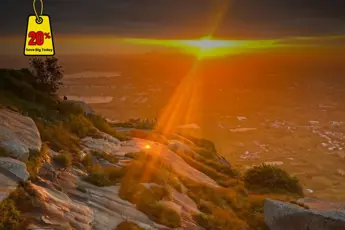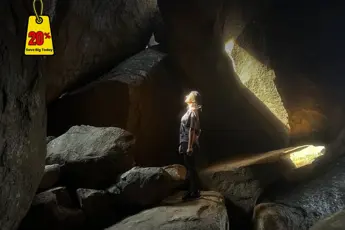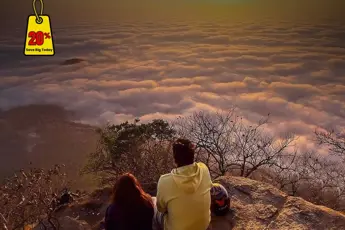

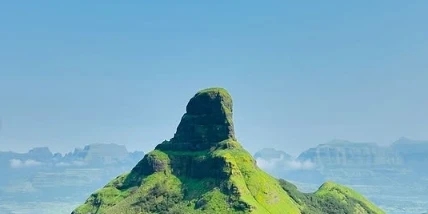
Ratangad Fort or also known as "Jewel of Forts", bears a historic history that dates back more than 400 years. Located in Maharashtra's Ahmednagar district, it is said to have been built during the reign of the Bahamani dynasty, subsequently taken over by the Mughals and finally the Marathas. The fort became popular when it was conquered by Chhatrapati Shivaji Maharaj in the 17th century, who realised its strategic significance as it dominated the hills and valleys around and the major trade routes of the region. Ratangad was also one of the Maratha Empire’s watchtower forts to protect activity in the Konkan area, and a defensive fort in the Sahyadri ranges too. Because of natural elevation and rock-cut hard structure, it was an ideal place for defence, communication, and protection. The fort complex is a collection of different stone bastions, gates, water tanks, and caves that speak of an amalgamation of military architecture and effective administration. Fort adventures and mountain history come together in our Treks in Maharashtra guide.One of the fort's most enduring features, the "Nedhe" or "Eye of the Needle," is a broad artificial empty area which was a result of centuries of wind erosion and was believed to have been a watchtower for an observer. It is also being used nowadays as a sanctuary for a lesser Shiva temple of greater religious importance to the locals. Even now, one is reminded of the Maratha heritage by ruins, inscriptions, and traditional architecture. Ratangad continues to attract historians, trekkers, and heritage enthusiasts who would be eager to witness its timeless beauty and the reminders of chivalry that have been etched into its rocks. It is not just a reminder of Maratha suzerainty but also of the glorious past of the Deccan plateau. Adventure seekers often choose our Ratangad Fort Trek Package for scenic fort exploration.Local tourist spots near Ratangad FortBhandardara Dam (Wilson Dam): It is just 10 km from Ratangad village. Bhandardara Dam is a highly touristy spot on the River Pravara. It has thick green forests around it, and with rolling hills, the dam has a peaceful environment and an excellent place for picnics, photography, and relaxation to feel nature's peace, especially during monsoon and winter.Arthur Lake: Provided by Bhandardara Dam backwaters, Arthur Lake is a serene and crystal clear lake lined with thick forests. It's ideal for boating or simply sitting on the edge of water, and as a camp location for trekking parties coming to the nearby forts. The hilly scenery mirrored in the lake makes it an ideal photographer's subject.Randha Falls: Situated 11 km from Bhandardara, Randha Falls is the state's most picturesque waterfalls, at 170 feet. The resultant multi-colored leap of the Pravara River into a gorge provides a bird's eye view and ear-shattering sound, particularly during monsoons, to entice nature enthusiasts and photographers in large numbers.Kalsubai Peak: Kalsubai is 5,400 feet and the state's highest peak. It is found close to Ratangad and is a challenging but highly fulfilling trek. It offers bird's eye view of the Sahyadris and is highly sought by adventure seekers. Temple on top of Kalsubai receives good number of pilgrims each year.Amruteshwar Temple: Located in Ratanwadi village, Amruteshwar Temple is a 9th-century-old Shiva temple constructed in Hemadpanthi style. Its ornate stone architecture, cultural significance, and serene ambience make it a place to visit guided by history buffs and pilgrims alike.Best Time to Trek to Ratangad FortMonsoon Season (June to September): During monsoon, the trek to Ratangad is an emerald green paradise. The hills are laden with an electric green hue, there are many streams and waterfalls along the way now and then. It's the prettiest time of the year to trek, especially for nature lovers and photographers. But the trek is slippery and difficult with rains in abundance, and precautions and trekking equipment must be adopted.Post-Monsoon Season (October to November): This is perhaps the most ideal time to visit Ratangad Fort. The landscape is green and full of rain, and the air is crisp, offering heavenly bird's eye views of Sahyadri ranges that encircle it. Weather is nice and ideal for trekking, camping, and photography. Wildflowers are in bloom, adding an element of fantasy to the trek.Winter Season (December to February): Winter season also is a good time to undertake the Ratangad trek. It's cold and cool with temperature between 10°C and 20°C and climbing could be undertaken even in the daytime. Weather is sunny and sunrise and sunset provide good views from the top. It's suitable for those who prefer to have a peaceful and cool trekking experience without having to endure rain and sun.Summer Season (March to May): Summer is the most unsuitable season for attempting Ratangad climbing. Trails dry up, leaves disappear, and the temperature rises above 35°C. Day treks are tiring, and water sources dry up. In case a trip has to be undertaken during summer, it is best to set out early morning, with proper water and sun protection.How to Reach Ratangad FortBy Road: Ratangad is situated near Ratanwadi village in the Ahmednagar district. The nearest and shortest one is from Bhandardara, 185 km from Mumbai and 175 km from Pune. Road motor vehicle or bus ride to Bhandardara, which is relatively road-networked well. Trek from Bhandardara to Ratanwadi, the starting point, by jeep or personal vehicle.By Train: The closest railway station to Bhandardara is Igatpuri, which is about 56 km from Bhandardara. Igatpuri is reasonably well connected to Nashik, Mumbai, and Pune. One may be able to go by taxi or bus from the station to Bhandardara and then drive up to Ratanwadi.By Bus: State buses or private buses run daily from Igatpuri or Akole to Mumbai and Pune. Thereafter, you can catch a local connecting bus or a taxi to Bhandardara. Sharing jeeps on rent are operational from Bhandardara to Ratanwadi during the peak season.