

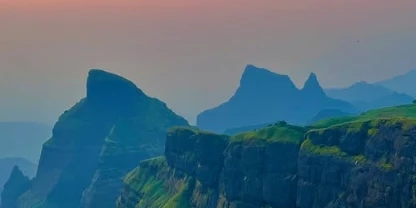
Harishchandragad is a historical and cultural place, hence it's of course an adventure spot to visit for trekkers and historians. Its past goes back to the 6th century and is an output of the Hemadpanthi school of architecture, which was a style well-loved and one that would be applied in all temples and forts in this region. It is said to have been built initially by the Devagiri Yadava dynasty, and later fortified by the Marathas. During the 14th century, Harishchandragad was occupied by the Yadavas and was an important fort because of its strategic military sites. The site of the fort atop the hills, with an extremely steep hill slope of the Sahyadri range hills, was the most appropriate place from which to command the region around. The fort was then captured by the Marathas in the leadership of Chhatrapati Shivaji Maharaj, where he employed the authority of the dominion again to capture certain such western ghats forts. Maharashtra is home to several iconic trekking destinations featured in our Treks in Maharashtra guide.The fort also has extremely strong religious connotations. At the top is the Harishchandreshwar Temple, the temple of Lord Harishchandra. It is a very, very old pilgrim destination. King Harishchandra, the pious and virtuous king of the Ikshvaku dynasty, it is said, did penance here. It is due to this that the fort has an extremely strong association with the name of the king, and this is evident from the name Harishchandragad. There is also another unique attraction of Harishchandragad in the shape of Konkan Kada, which is a cliff on the edge of the fort with a stunning view. There is also one such belief that there used to be some monks and hermits who would perform prayers inside the temples and the caves in the fort, and it became a sacred place as such. With time passing by, with invasions and the passage of time, Harishchandragad passes through the history, culture, and natural heritage of Maharashtra. Adventure enthusiasts and nature lovers often explore our Harishchandragad Trek Package for an unforgettable mountain experience.places around it, Harishchandragad TrekKalsubai Peak: Kalsubai Peak or the "Everest of Maharashtra" is the state's highest peak at 1,646 meters above sea level. It's 25 kilometres away from Harishchandragad, and it is a challenging yet picturesque trek. The trek is along the forest path, boulder landscape, and slope to finally stand on top, from where vast panoramas of the surrounding Sahyadri range of hills are available. Kalsubai is also renowned for its spiritual significance, and the top is the Kalsubai temple in honour of the goddess Kalsubai. It's renowned among adventure travellers and trekkers to see the state of Maharashtra.Bhimashankar: 50 km from Harishchandragad is Bhimashankar, which is a pilgrim spot and paradise for nature lovers. As the Bhimashankar Temple is also a Shiva temple, it is also one of the 12 Jyotirlingas of India and thus a good pilgrim spot. Visiting Bhimashankar is a trek journey in forests inhabited by varied fauna and providing a scenic landscape of hills and valleys around. The Bhimashankar Wildlife Sanctuary is close by and offers the facility of spotting a variety of flora and fauna, and even the Indian Giant Squirrel, which has now been included in the endangered list. Trekkers and pilgrim tourism are appropriate for it.Malshej Ghat: Malshej Ghat is 35 km from Harishchandragad. It is a hill station with beautiful surroundings, renowned for its foggy weather, waterfalls, and green forests. It is a haven for nature lovers, birders and mountaineers. The ghat road over the curve in Malshej has a breathtaking vista of the Western Ghats, and during the monsoons, raging waterfalls plunging off cliffs have a divine sight. Malshej Ghat is an ecological diversity because of the kind of flora and fauna present there, and the region is a line of passage for some birds like flamingos.Naneghat: 50 km from Harishchandragad, Naneghat is a very old pass and also a very significant trading link between the Deccan Plateau and Konkan coast. Naneghat trek is a blend of nature and history since ancient cave ruins and inscriptions line the trek. Scintillating Sahyadri ranges' views surround the pass, and it is also one of the most frequented trekking routes. Bird’s-eye view above hills and valleys surrounding trekkers at the summit of Naneghat is a luxury they enjoy. The place is also from history since medieval and ancient merchants used the place to their advantage.Tung Fort: Tung Fort, situated 40 km from Harishchandragad, is a lesser-known but interesting fort of the Sahyadri mountain range. The fort is extremely appealing to trekkers because of the challenging, steep climb and the bird's eye view at the summit. Tung Fort was the gem of the Maratha Empire as well as a military camp. Trekking will take one through rock-studded roads and forest, and the top provides views of the surrounding forts like Lohagad and Visapur. The fort is one of the favourites among those adventure lovers who would just love to do off-beat treks with very little crowd.Alang, Madan, and Kulang Forts: These three forts, which are around Harishchandragad, are a paradise for trekkers. The forts belong to the Sahyadri hill range, old forts and the trek to the forts is a tough walk along rocky ridges and slopes. The alang-Kulang-Madan range is also referred to as the "trio of forts" and one of the toughest treks of Maharashtra, and thus, experienced trekkers are attracted towards it. These forts are not only historically important but also offer pretty views, and for this reason alone, the destination is a preferred destination as a holiday spot for anyone anticipating a challenging but worthwhile Western Ghats trek.Kundalika River: The Kundalika River, which runs up to 45 km in length, is a water sports fanatic's delight as a white-water rafting venue. The river passes through the stunning Sahyadri hills area and offers great rafting trails, which are a local site for nature lovers. There are fewer trekking trails offered here, too, and the place is commonly known as a natural viewpoint area. The region of Kundalika River amidst forest and rock also makes the place a nice place to discover for picnics and nature walks.Best Season to Visit for Harishchandragad TrekWinter (October to February): The winter season is the best and suitable time to undertake the Harishchandragad trek. The weather here is cool and cold, with a temperature between 10°C to 20°C, and thus trekking becomes extremely easy. It is a season that offers clear blue skies and sparkling sights of the Sahyadri mountain ranges and sufficient time for the trekkers to view the natural beauty that surrounds the fort. The weather also does not get tired hot, thus the trek is not tiring too much because of the summer heat. Winter months are also suggested to witness the scenic sunset and sunrise on the top of the fort, as cold wind gives a mysterious essence to the environment.Monsoon (June to September): Monsoon is not a relaxed but no less interesting time to trek to Harishchandragad, particularly for experienced trekkers. The whole scenario is made greener and more grassy, and waterfalls on the track become operational, thereby enhancing the look of beauty. But the hike then becomes slippery and dangerous with unmanageable trails, particularly in the case of incessant rain conditions, when the hill is by no means an effortless one to conquer. The iconic Konkan Kada rock and the whole section of the climb consisting of rock becomes particularly hazardous due to the slippery rock. Although it's a different experience, the trekker can use this season only if he braves the issues suffered due to rain and wet slopes. Rain clothes need to be specially worn, and more care needs to be taken during such a season.Summer (March to May): Summer is not the best time to trek to Harishchandragad as it's very hot and would rise to a minimum of 35°C in the daytime. The sun dries up and tires one, so it's a challenging hike. But for others who would appreciate fewer hikers on the path and who are used to hiking in the hot sun, summer is also an option. One should ideally start the trek early morning so that one avoids the heat, as well as so that one feels well-hydrated and has loose, relaxed clothing. Summer months are also equally good weather-wise, but have fewer plant deaths due to a drier landscape than the monsoon or the winter season.How to Reach Harishchandragad TrekBy Road (From Mumbai or Pune): The easiest way down from the trek's end is by road. Coming down from Mumbai, the best would be to come down on the Mumbai-Pune Expressway and take a deviation towards Kalyan. Come down from Kalyan by Murbad, which takes you down to the base village of Khireshwar, the starting point of this grand trek. The drive would take the usual 4 to 5 hours, depending on traffic. For the Pune traveller, the journey is a road trip from Katraj and Bhor to Khireshwar village, a 3 to 4-hour road trip. Taxi, hired car, or local transport are the modes by which one undertakes the journey to Khireshwar.By Train: Though a direct train to Harishchandragad is not available, the closest railway stations are Kalyan (from Mumbai) or Pune. Either of these can be accessed by the base village of Khireshwar through a local auto-rickshaw or taxi. Kalyan is the most reliable option, as it is the most convenient place for people coming from Mumbai.By Bus: Buses from Mumbai and Pune can go as far as Murbad, which is at the lower end of the trek. Jeeps or village transport from Murbad, which are available locally, will drop you off at Khireshwar. 5-6 hours from Mumbai and 4 hours from Pune by bus would be their trip.